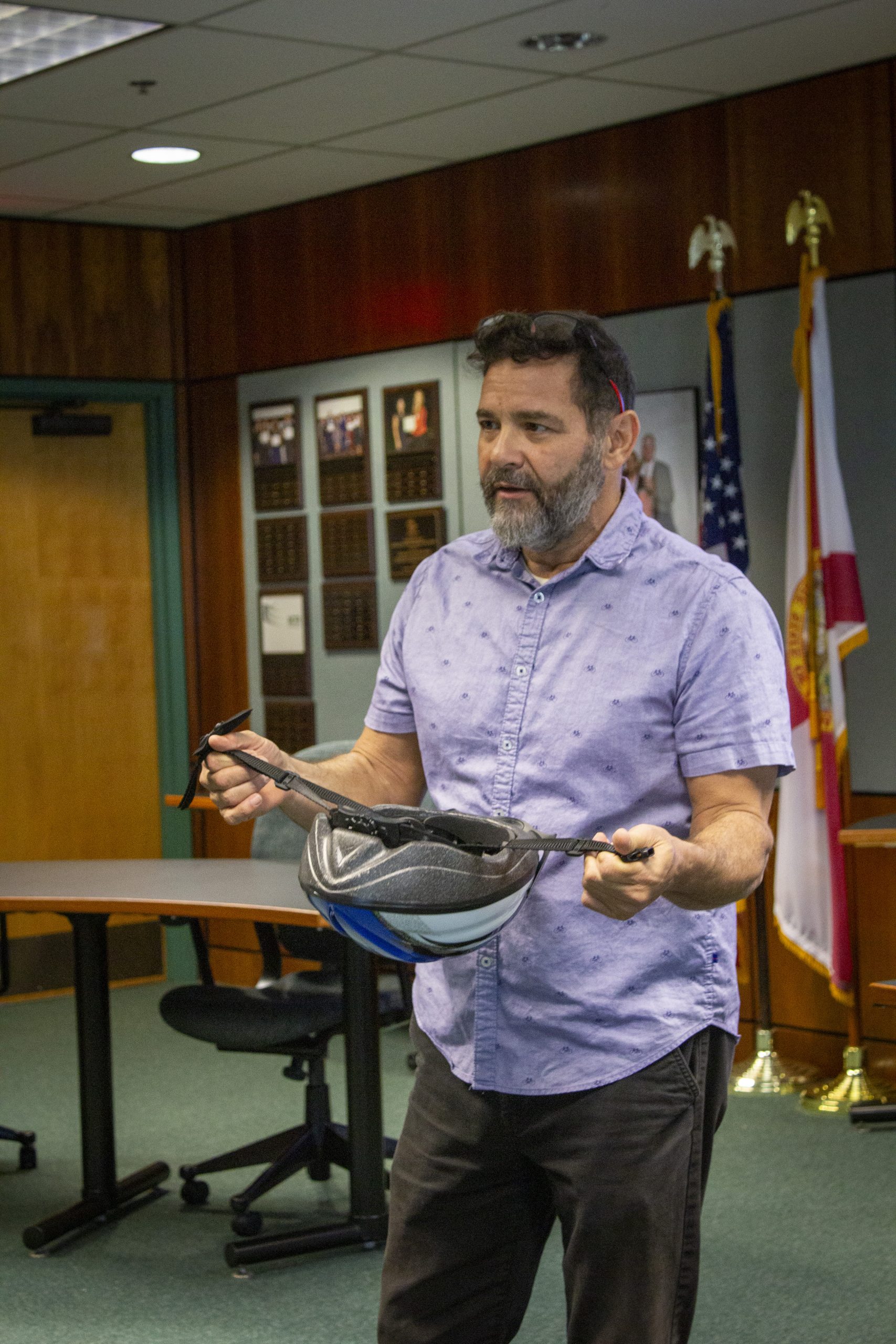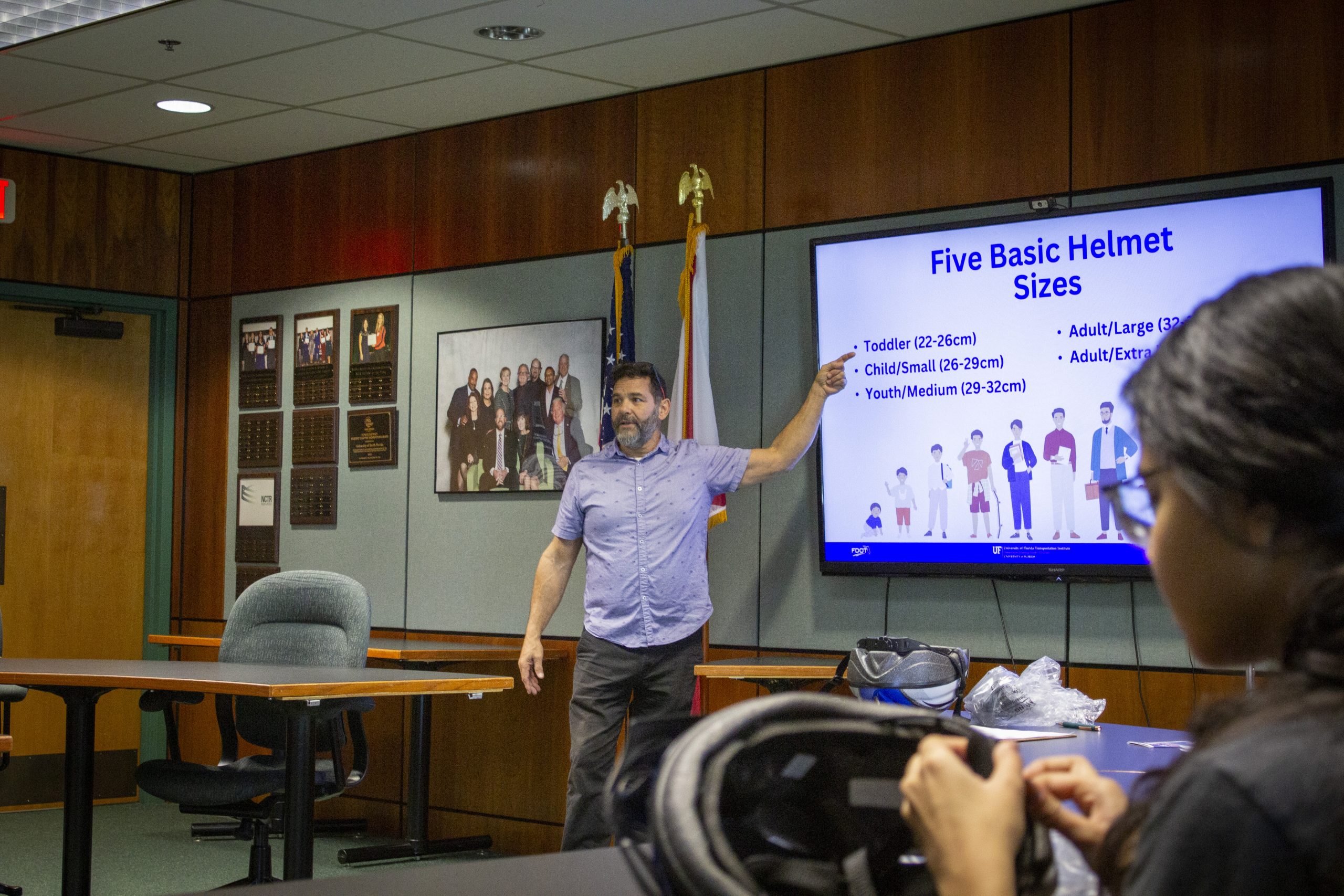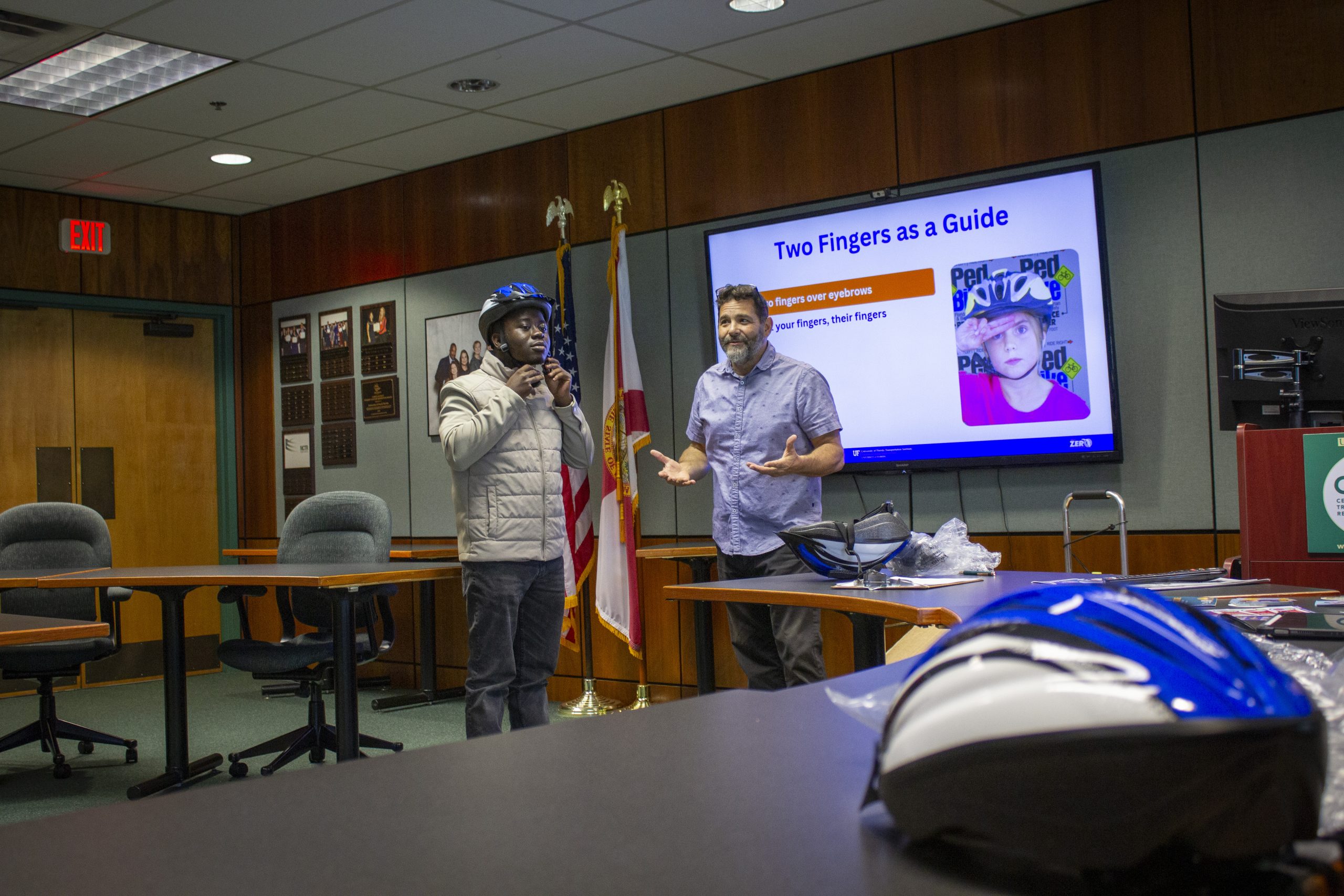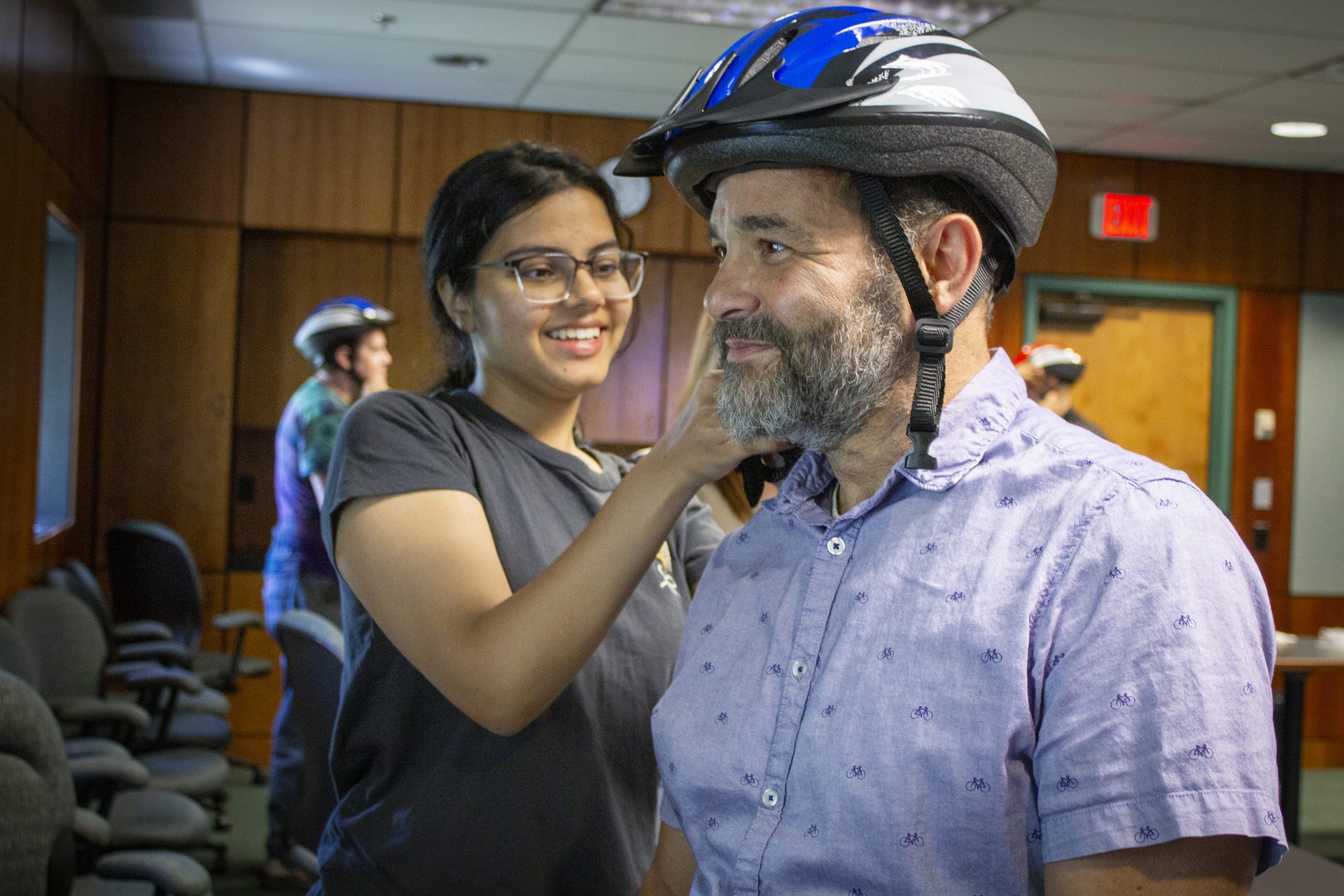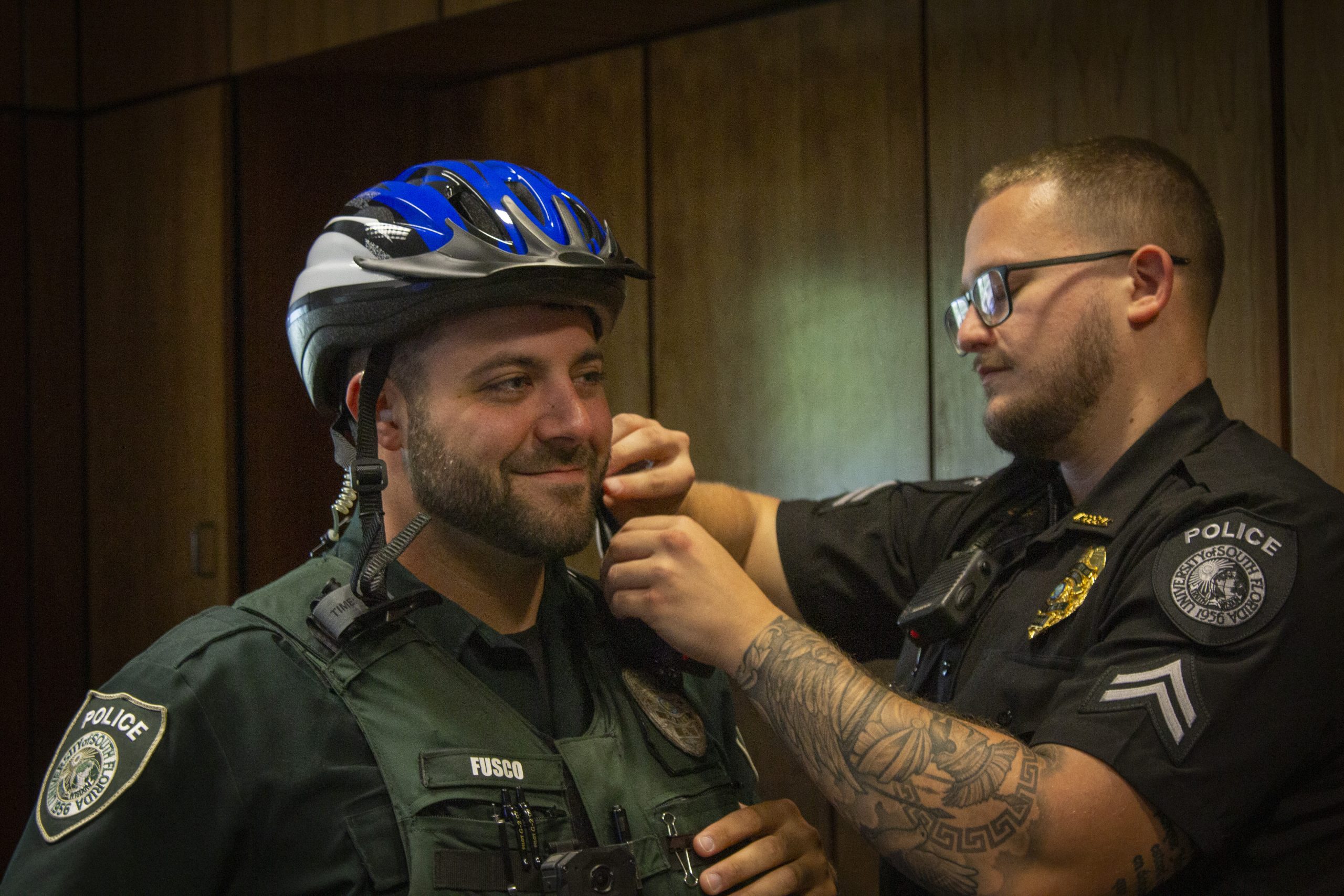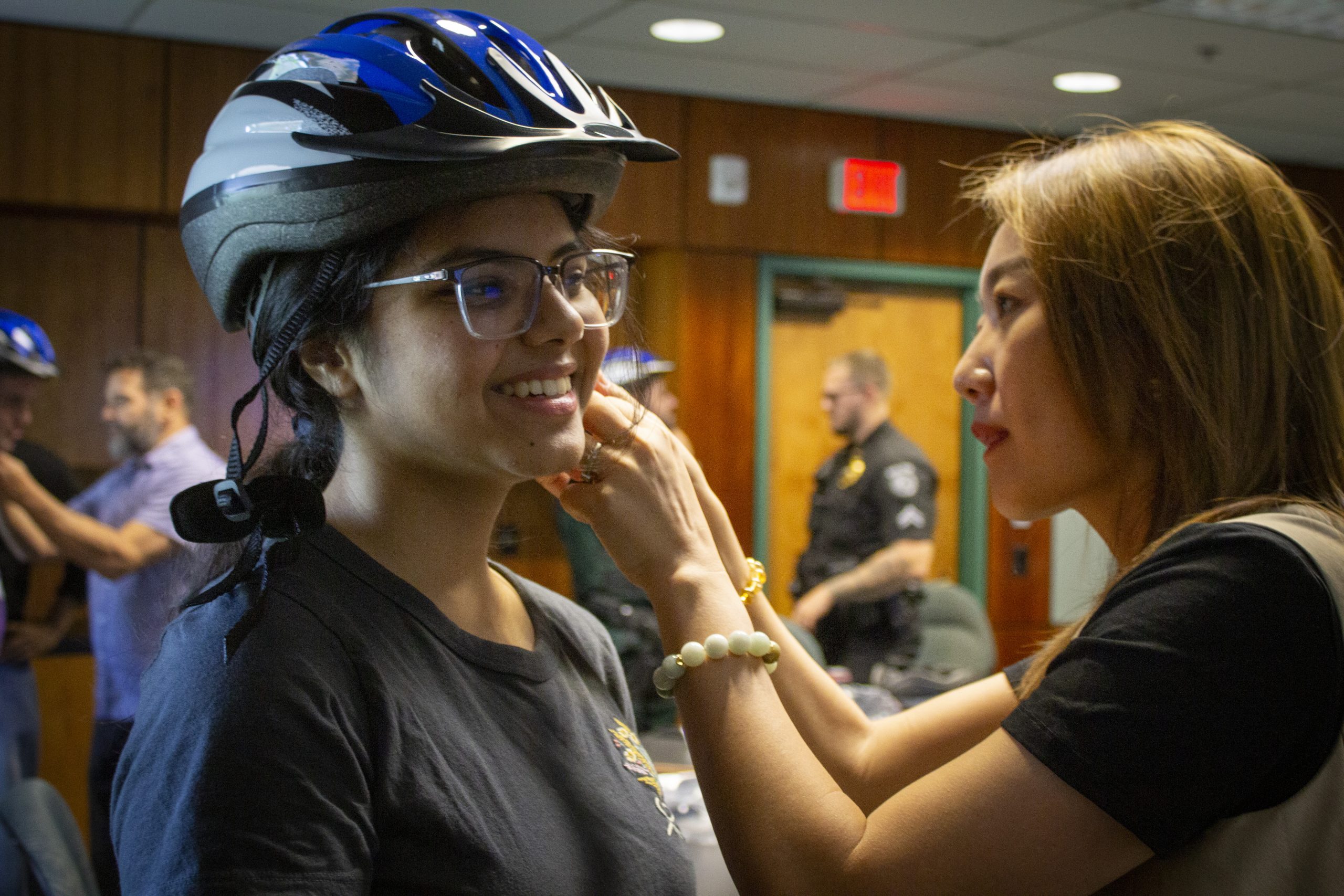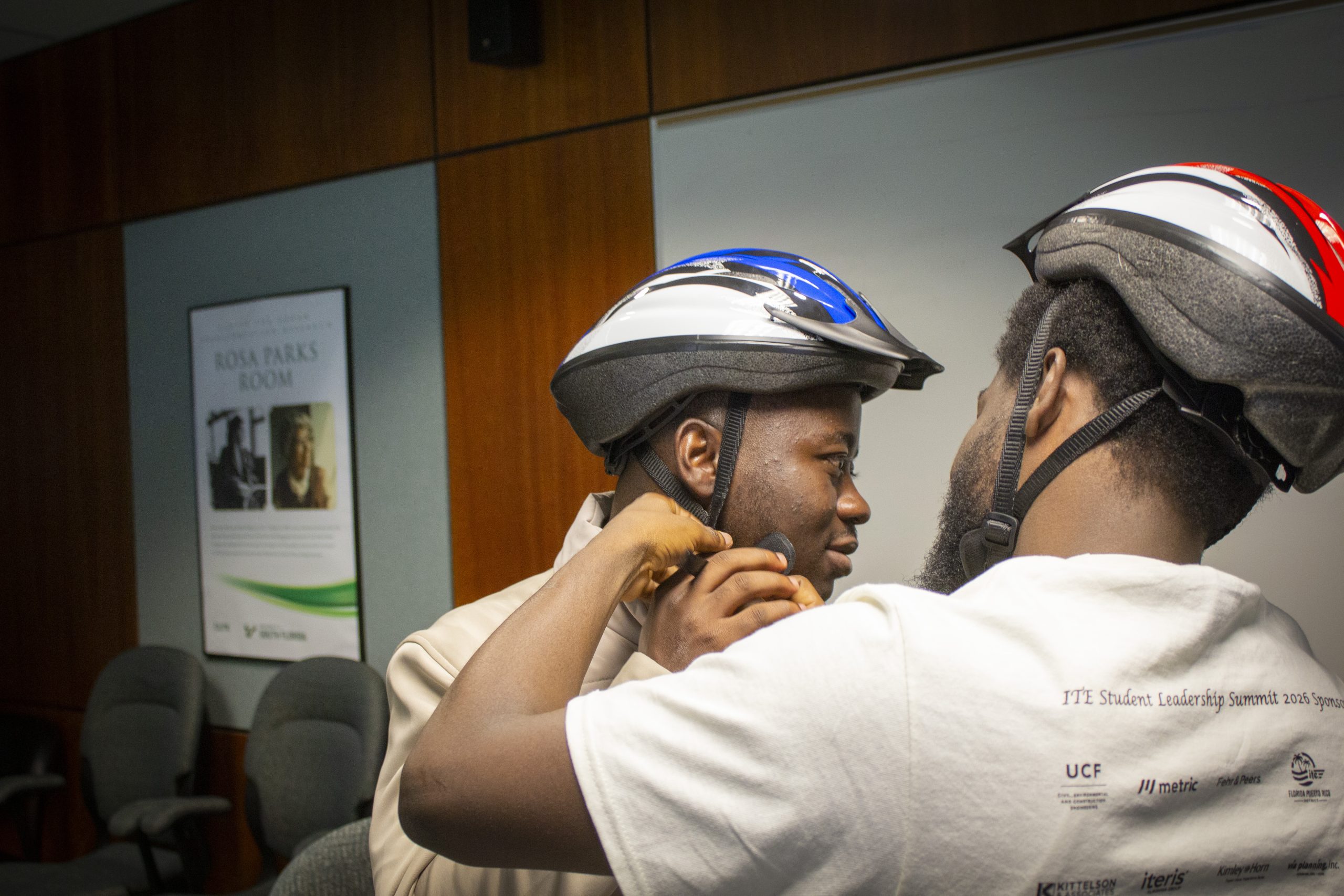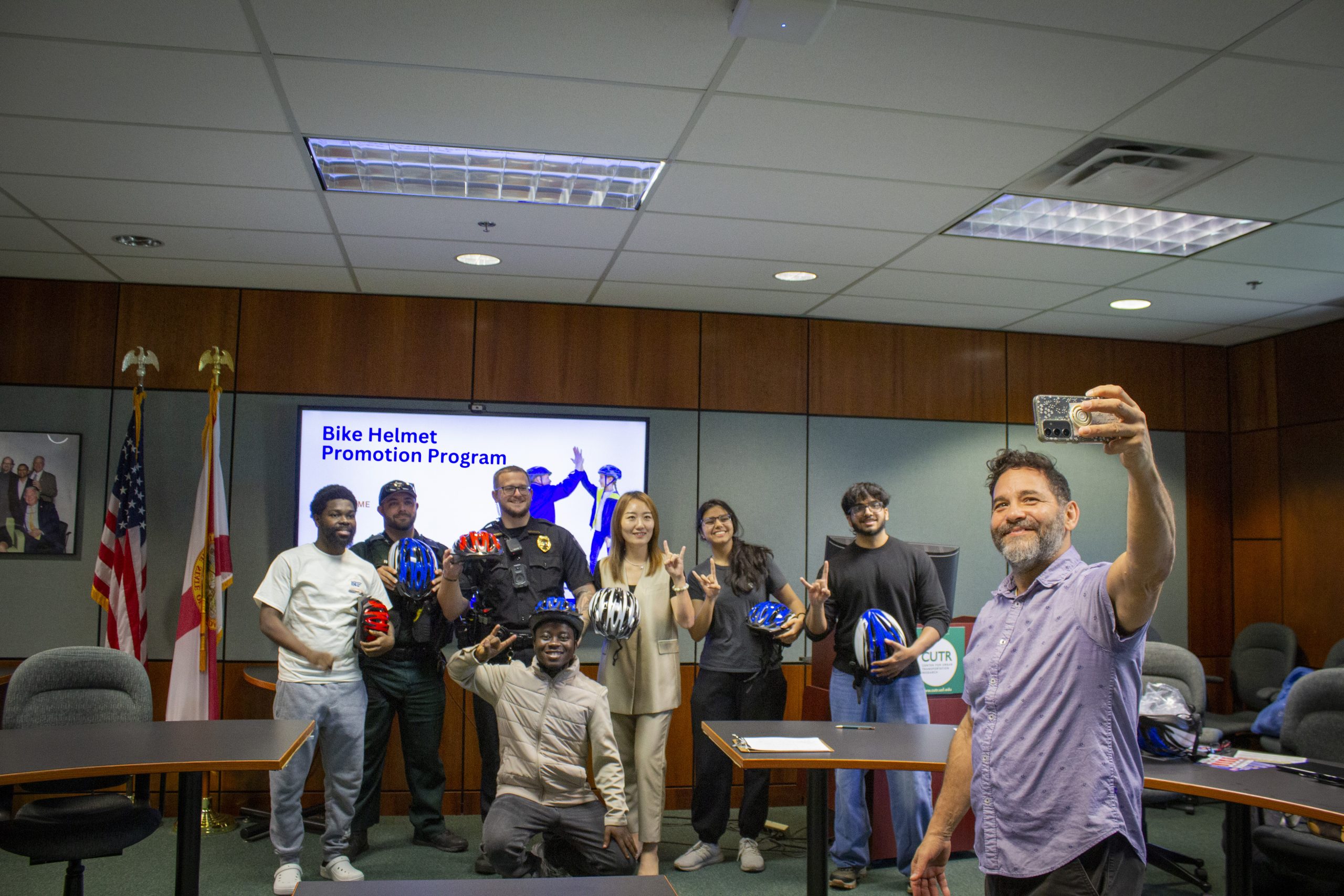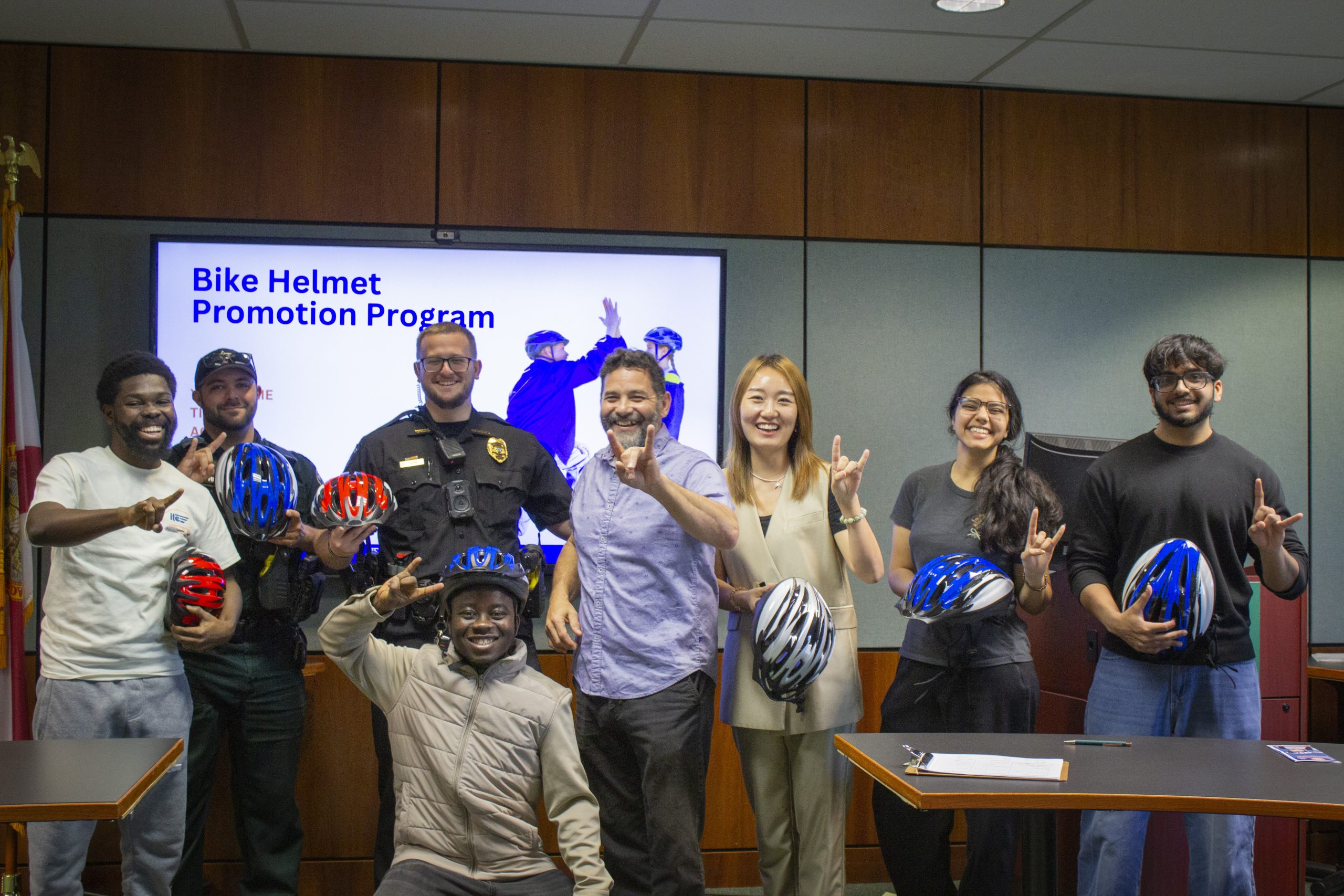
On March 26, 2026, CUTR’s Intelligent Transportation Systems (ITS), Traffic Operations, and Safety team hosted a successful Bicycle Helmet Fitting and Training at the University of South Florida Tampa Campus through CUTR’s Peer-to-Peer University Pedestrian and Bicyclist Safety Education and Outreach Program (Peer-to-Peer). This program is made possible through funding from the Florida Department of Transportation (FDOT).
The hands-on training focused on one of the most fundamental, and often overlooked, aspects of micromobility safety: proper helmet use. Correctly fitting and wearing a helmet can significantly reduce the risk of head injuries for both bicyclists and e-scooter riders, making this topic relevant for students navigating a busy campus environment.
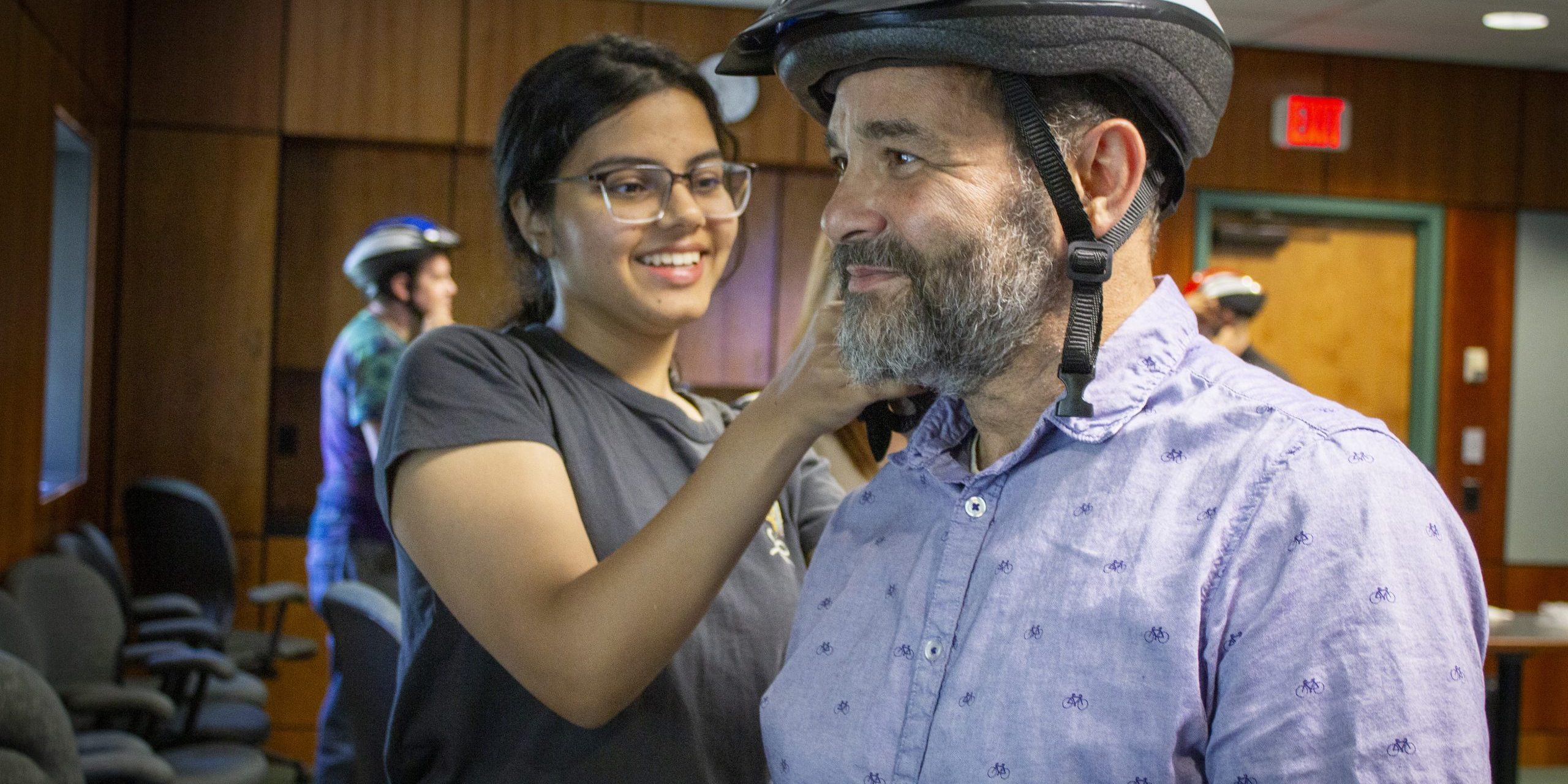
The session was led by Paul Simpson from Florida’s Pedestrian & Bicycling Safety Resource Center, whose expertise provided participants with practical knowledge they could immediately apply. Attendees practiced helmet sizing and adjustment techniques, learned how to evaluate proper positioning, and discussed common helmet misuse issues that can reduce safety effectiveness.
Four CUTR Peer-to-Peer Safety Ambassadors, Kwabena Amoako Adjei, Marvin Osei-Kuffour, Ruth Sastry Ayalasomayajula, and Ved Patel, participated in the training, alongside two officers from the USF Police Department, reinforcing a collaborative and community-focused approach to pedestrian and bicyclist safety.
As a result of completing this training, all participants are now qualified helmet fitters, equipped to assist others with proper helmet fitting and safety education. This expanded capacity supports the Peer-to-Peer Program’s mission to empower students and campus partners as safety leaders, helping ensure that helmet use becomes both correct and consistent across campus.
Through continued education and hands-on experiences, CUTR’s Peer-to-Peer Program promotes pedestrian and bicyclist safety across Florida universities through student-led education and outreach. Individuals interested in learning more about this program are encouraged to contact Peer-to-Peer Project Director, Dr. Can Cui.