In October of 2023, staff from the CUTR TMI program completed a ten-year Transit Development Plan (TDP) for Indian River County’s GoLine public transportation system. TMI staff, in partnership with Indian River County Metropolitan Planning Organization (MPO) and Senior Resource Association (SRA) staff, developed a comprehensive yet manageable TDP process that included extensive public involvement, a detailed analysis of the GoLine system and current and projected service area conditions, and advanced avenues that could be taken to identify new funding for service expansion in the near and long-term. The final TDP calls for improving the current GoLine service quality by expanding evening service, weekend service, and addressing needed capital, infrastructure, and information technology investments.

New funding identified for top service plan needs
As is typical of many major TDP efforts, all of the prioritized service and capital needs identified in the Indian River County FY 2024-33 TDP were unfunded based on current funding sources. However, what sets this TDP apart from most other “unfunded” transit plans is that during the MPO meeting where the plan was up for adoption, local decision-makers agreed as part of the adoption of the plan that the top two service needs should be funded and included in the County budget for the upcoming (2024) fiscal year. In addition, the Florida Department of Transportation (FDOT) District Four Transit Office agreed to match 50% in State Service Development Grants with the newly committed 50% Local Match for the following top service needs:

- Weekday Evening Service Expansion
- Extends the current span of transit service on Weekday evenings from 7:00 p.m. to 9:00 p.m.
- Saturday Service Expansion
- Expands the current span of service on Saturdays from 8:00 a.m. – 5:00 p.m. to 7:00 a.m. to 7:00 p.m.
- Adds all-day service to Route 13 (the last GoLine route not operating on Saturdays)
- Paratransit Service Expansion
- Community Coach paratransit service will be expanded to match new Weekday and Weekend service spans
The expanded GoLine and Community Coach service is expected to commence in October of 2024.
CUTR’s TMI program played a crucial role in crafting a comprehensive Transportation Development Plan (TDP) for Indian River County. This TDP not only exhibited a robust analytical framework but also prioritized and ensured active public participation at key stages of the planning process.
For this effort, the TMI team implemented a four-tiered approach to maximize the public’s ability to weigh in on their most pressing public transportation concerns, feedback on expanding the public transportation service in Indian River County, and an analysis of current and projected demand for such services. TMI’s four-tiered approach to identifying critical needs included:

- On-Board Surveys: The program distributed and collected a record number of in-person on-board surveys of passengers on all GoLine fixed bus routes (870 surveys collected)
- Social Media Campaign: An innovative social media campaign was used to actively reach out to Indian River County residents. This effort involved leveraging social media platforms to seek out and proactively engage with the community. The campaign’s innovative strategy resulted in the successful collection of 600 survey responses, reflecting a significant step forward in actively involving residents in the transit planning process.
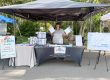
- In-Person Meetings: Detailed input from the public, decision-makers, and stakeholders at numerous public MPO and Local Coordinating Board (LCB) meetings and public workshops (including at the United Against Poverty Center and the Gifford Activity Center)
- Transit Market Analysis: Current and projected transit markets and activity patterns within Indian River County and the region were examined to best identify the population segments and location of markets for public transportation services.
The four-tiered approach was successful in Indian River County because it ensured that a prioritized and publicly supported list of GoLine service and capital needs were thoroughly vetted but easily understood by the public, stakeholders, and decision-makers. The fact that the top two service priorities received immediate action for Local and State funding is a testament to the success of this approach.
The CUTR TMI Team applies this four-tiered approach to all of the TDP’s it develops for local governments and transit agencies. This proactive approach is portable and can be applied to each community, while also being flexible enough to adjust to specific community characteristics or needs.
Interested in learning more? Contact Martin Catala, TMI program director.